
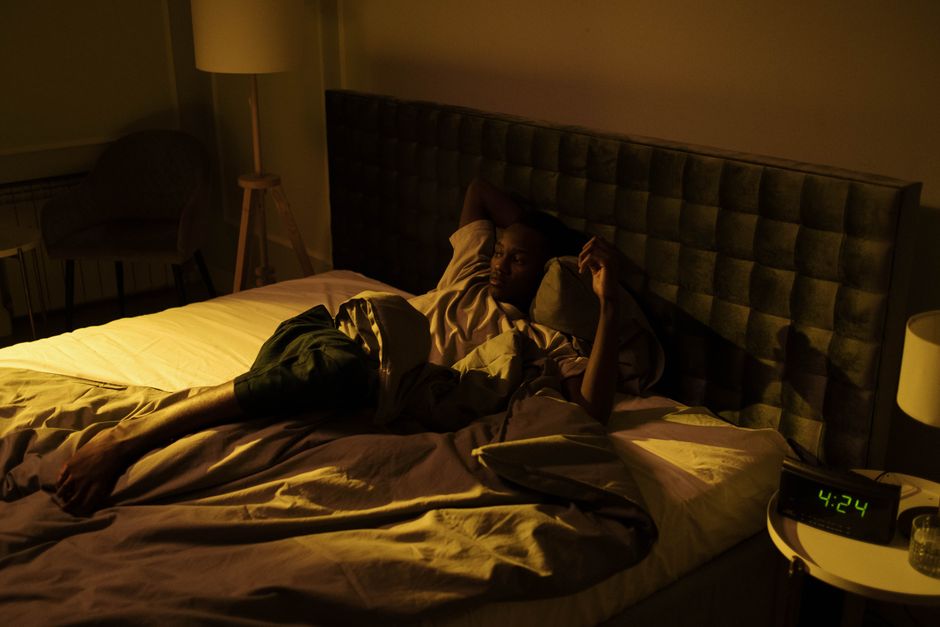
Seeing the time during a nighttime awakening can turn a quiet moment into a countdown. Hiding the clock may reduce the pressure to calculate what remains and help the awakening feel less consequential.
The room is dark. You reach for your phone, see 3:17 a.m., and immediately start subtracting. If you fall asleep now, you can still get four hours. Then it is 3:29. Now you are estimating how tired you will feel during the morning meeting, the school run, or the drive to work.
The arithmetic feels useful because it offers a sense of control. Yet every calculation gives the mind another problem to solve when you would rather let the night continue.
How a glance at the clock becomes a deadline
A brief awakening can pass with little attention. Once a number appears, the moment gains a timeline.
The clock supplies a starting point. Your alarm supplies an endpoint. Your mind fills the space between them with predictions: how much sleep remains, how long you have been awake, and what tomorrow might cost.
These calculations can make each passing minute feel important. At 3:17, there seems to be time. At 3:42, the night may begin to feel as though it is slipping away. The clock has not revealed how the rest of the night will unfold, but the changing numbers can make the outcome feel settled.
This is sleep math at its loudest. The bedroom stays quiet while the mind starts budgeting minutes.
That mental work may also pull attention toward signs of wakefulness. You notice the pillow, your breathing, a sound outside, or the fact that you are still thinking. Checking again becomes tempting because the previous check created a question: How much time has passed?
Why the calculation can feel so convincing
Sleep is difficult to command directly. You can make the room comfortable and give yourself time to rest, but you cannot force the exact minute when sleep arrives.
Clock-checking offers a measurable task inside that uncertainty. Numbers feel concrete. They can also create false precision.
If the clock says four hours remain, that does not tell you how quickly you will fall asleep, whether you will wake again, or exactly how you will feel tomorrow. It gives the mind a figure without giving it certainty.
The emotional effect can still be immediate. A person who sees “3:17” may picture tomorrow’s fatigue before tomorrow has begun. The concern becomes part of the present moment, even though the prediction may prove inaccurate.
This does not mean every glance at the clock causes distress or that everyone should remove every time display. Some people look once and return to sleep. The practical question is simpler: does checking the time help you settle, or does it start a chain of calculations?
Make the time less available overnight
If visible numbers reliably start the countdown, make them harder to see.
Turn a bedside clock away from the bed. Dim the display or cover it if the alarm will still work safely. Place your phone face down and far enough away that checking requires a deliberate choice. If you need the phone for emergencies, use settings that allow important contacts through while keeping routine notifications quiet.
Set the alarm before bed, then let it hold the time for you. You do not need to monitor the remaining hours for the alarm to work.
When you wake, replace the calculation with a low-demand cue. You might notice the weight of the blanket, relax your jaw, or take a few comfortable breaths without trying to produce a particular result. The aim is to give your attention somewhere neutral to rest.
If you do check the time, avoid turning that choice into another reason for frustration. Put the screen down. Return to the next quiet action. A night does not need to go perfectly for rest to matter.
Give tomorrow fewer jobs during the night
Nighttime predictions often sound urgent: “I will be useless tomorrow,” or “I have ruined the whole day.” Those thoughts ask you to solve tomorrow while lying in the dark.
A gentler response can stay close to what you actually know: you are awake right now, and you can make the room less demanding. Tomorrow’s decisions can wait until morning.
Before bed, it may help to prepare one small fallback for a rough night. Put the coffee mug by the kettle. Move a demanding task later if your schedule allows. Decide that you will reassess your energy after breakfast rather than at 3:17 a.m. A modest plan can reduce the feeling that every remaining minute carries the whole next day.
Tonight, set the alarm, turn the display away, and let the clock keep count by itself.
This is general wellness information, not medical advice. If sleep problems are persistent, severe, or affecting your daily life, talk with a doctor or another qualified health professional.
Comments
No comments yet.